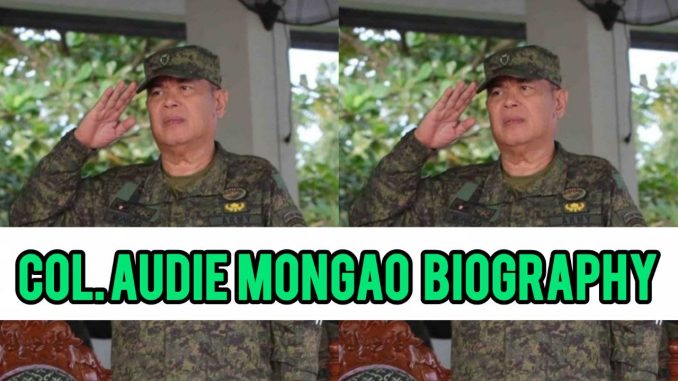
Colonel Audie Mongao Biography
Colonel Audie Mongao was born on June 10, 1963, in Manila, Philippines. He is a senior officer in the Philippine Army who, by public accounts, has served the nation for over 34 years. Mongao is commonly described in statements and public posts with the military title markers MNSA and GSC, which indicate advanced professional military education, and his service is associated with the infantry branch under the service number O-10933 INF. He is also reported as a graduate of the Philippine Military Academy, class of 1992, though there is no single public official curriculum vitae available that lists every posting, medal, or date of promotion. Colonel Audie Mongao is 62 years old as of 2026.
The picture people see of Mongao is of a career soldier shaped by decades of work inside a large institution: a man who rose through ranks, completed staff and national security studies, and took command assignments related to training and doctrine. Public descriptions emphasize experience and professional schooling, such as a Master in National Security Administration and completion of a graduate staff course, labels that point to the kind of career progression common among senior army officers.
Outside of those institutional notes, personal details such as family life, religion, or private biography remain largely private in authoritative public sources. Social posts and supporters have offered character sketches calling him a responsible husband or a God-fearing father, but these personal remarks are not confirmed in official military biographies. The public record therefore presents Mongao mainly as a long-serving officer whose background is professional and whose private life has been kept out of formal reporting.
Colonel Audie Mongao Career
Colonel Mongao built a long career in the Philippine Army, largely in units tied to training and command functions. He is reported to have been commander of the Training Support Group under the Army Training Command (TRACOM). That role places an officer squarely within the institution responsible for shaping the skills, discipline, and leadership of other soldiers.
Over more than three decades of service, Mongao’s career path — as described in public accounts — focused on infantry work, training leadership, and staff responsibilities that lead to senior command appointments. While a full, itemized public service record showing every promotion date, awards, or precise assignments has not been published, the public descriptions show a pattern: formal military education, years of active service, and leadership posts within the army’s training command structure.
Within the professional military community these markers matter. Advanced schooling such as a Master in National Security Administration and a Graduate Staff Course are standard achievements for officers preparing to take on higher responsibilities. The role of Training Support Group commander involves planning, organizing, and directing training programs and supporting the technical side of army instruction. Colleagues and public posts that mention Mongao emphasize his experience in training and his ability to lead troops and training activities — traits that explain why he rose to his post inside TRACOM. His long service and leadership in training made him a known figure among soldiers and among those who follow army affairs in the Philippines.
The army environment in which Mongao built his career has always been one where discipline, chain of command, and public neutrality are core expectations. Officers who move into senior roles in training also carry the responsibility to model standards for younger officers and enlisted personnel. Much of what is publicly known about Mongao’s professional life is therefore framed by those expectations: schooling and command, long service, and formal responsibilities to train and shape future leaders of the army. This career picture helps explain why his later public statements — and the military’s response — became so visible and newsworthy.
Colonel Audie Mongao Controversies
In early January 2026 Colonel Audie Mongao became the subject of national controversy after a social media screenshot circulated showing a message attributed to him withdrawing his “personal” support for President Ferdinand “Bongbong” Marcos Jr.
The message that spread online reportedly said: “I, Col. Audie A. Mongao … am withdrawing my personal support to our President and Commander-in-Chief, Ferdinand ‘Bongbong’ Marcos Jr! Sobra na, tama na! The Filipino people is worth fighting for …” The circulation of that message triggered swift action by the Philippine Army, which relieved Mongao from his post as commander of the Training Support Group and placed him in attached/unassigned status while an investigation was launched to determine the statement’s authenticity and whether administrative or legal charges would apply.
Army commanders also publicly described efforts to reach Mongao during his New Year’s break, noting at one stage that attempts to contact him had not been successful and that the command would extend emotional support as part of their duty of care. The Training Command chief, Major General Michael Logico, said the unit would investigate and determine any possible administrative or criminal charges related to the alleged online statement. The army’s official response stressed the institution’s loyalty to the Constitution, the chain of command, and the non-partisan stance expected of uniformed personnel.
The controversy did not exist in isolation. It arrived amid broader political and public tensions over alleged anomalies in flood control and infrastructure projects that had become a national story throughout 2025. Investigations, public hearings, and calls for accountability around those projects had generated a wave of criticism and political debate, and the military’s role as a non-partisan institution became part of the public conversation.
In that climate, statements by retired officers and civic groups critical of the administration drew heightened attention from both the government and the public. The arrest of retired Air Force Major General Romeo Poquiz in early January 2026 on charges of inciting to sedition — a separate but related episode — underscored how volatile the situation had become and how calls for resignation or withdrawal of support could lead to criminal complaints or detentions.
Groups such as the United People’s Initiative publicly reacted to Mongao’s reported withdrawal of support in ways that called him a principled voice rather than a rebel. The wider context of flood control probes and public anger at alleged corruption helped shape public reactions to Mongao’s alleged statement and the army’s immediate decision to relieve him pending investigation.
Official statements from the Palace and other government offices emphasized due process and the rule of law. The Palace said evidence and legal process would guide any accountability measures and that the government was listening and observing developments. At the same time, military spokespeople reminded personnel of their duty to maintain professionalism and the nonpartisan character of service, noting that public expression by a serving officer that appears to withdraw support for the commander-in-chief raises questions under military law and discipline. The army made clear it would pursue an inquiry to determine whether the post was genuine, who had authored it, and what charges — if any — would follow.
The episode underlined several difficult realities at the intersection of military service, public life, and politics. In a modern social-media age, screenshots, comments, and group-chat messages can spread quickly and create a public impression long before formal investigations clarify the facts.
For a senior officer whose career is rooted in institutional discipline and training, an alleged public withdrawal of support for civilian leadership presents both a legal and reputational dilemma, even when the officer’s motives are framed by supporters as patriotic or principled. The army’s measured, procedural response — relief from post, placement in attached/unassigned status, and the promise of a thorough probe — reflected the institution’s attempt to balance respect for individual expression with the duty to preserve the military’s nonpartisan role and the chain of command.
Conclusion
Colonel Audie Mongao’s career was brought into the national spotlight in January 2026 when an alleged social media message withdrawing personal support for the president circulated, prompting his immediate relief from command and an investigation by the Army Training Command. The case sits against a larger national backdrop of inquiries into flood control project anomalies and heated public debate, and it raises questions about the balance between personal expression and military discipline in a democracy.
FAQs
What job did Colonel Mongao hold in the army?
He served as commander of the Training Support Group under the Army Training Command (TRACOM), a role tied to training leadership and the preparation of soldiers.
Why was Colonel Mongao relieved from his post?
He was relieved and placed in attached/unassigned status after a screenshot of a message circulated online that reportedly showed him withdrawing his personal support for President Ferdinand “Bongbong” Marcos Jr., and an investigation was launched to verify the post and determine any disciplinary or legal consequences.
Did any groups react to Mongao’s reported statement?
Yes. Some networks and groups, including the United People’s Initiative and certain retired officers, publicly reacted to the circulation of the message; at the same time, authorities stressed the need for due process and institutional discipline. The broader context included arrests and charges against some retired officers linked to calls for the military to withdraw support from the administration.

Evans Jude is a finance writer who focuses on financial management, budgeting, and the latest trends in those areas. He has ten years of experience in finance journalism and produces clear, practical articles—explaining budgeting tips, breaking down policy or market changes, and sharing expert insights so readers can manage money better. He holds a BSc and an MSc in Banking and Finance, giving him the academic background to explain complex financial ideas in simple terms.
Leave a Reply